
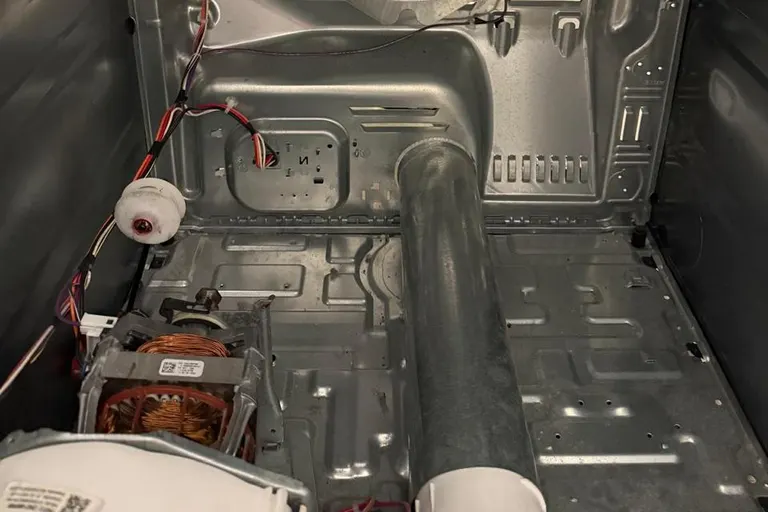
When an electric dryer tumbles but produces no heat, the heating element is an easy suspect. It is not always the correct first conclusion. Many North American electric dryers use one line-to-neutral path for the motor and controls while the heater depends on the full line-to-line supply. If one side of the two-pole circuit is lost, the drum may continue to turn while the heater cannot operate.
Start with the selected cycle
Confirm that the dryer is on an actual heated cycle rather than Air, Fluff or another no-heat setting. Check the lint screen and observe the exterior exhaust only from a safe, accessible location. Restricted airflow can cause long dry times, overheating and protective-device failures, but it does not explain every no-heat complaint.
Why the breaker can be misleading
A linked two-pole breaker can lose one leg or appear set when one side has tripped. The homeowner-safe step is to turn the linked breaker fully off and then on once. If it trips again, stop. Repeated resets can conceal a dangerous fault and should not replace diagnosis.
The smallest useful diagnostic sequence
- Confirm a heated cycle, a clean lint screen and no obvious cord, plug or receptacle heat damage.
- Prove the complete supply: hot-to-hot and each hot-to-neutral, using the appliance rating plate and installation instructions as the authority.
- Only after correct supply is confirmed, unplug the dryer, prove it is de-energized and use the exact wiring diagram to test the heater and protective devices.
- If an overtemperature device is open, identify the cause—such as restricted venting, blower trouble or a control fault—before returning the dryer to service.
What correct supply generally looks like
A typical split-phase installation is nominally about 240 volts hot-to-hot and about 120 volts from each hot to neutral. Some buildings provide about 208 volts line-to-line. The exact dryer rating plate and manufacturer instructions control. A missing leg, incorrect hot-to-hot reading or heat-damaged connection means supply correction comes before dryer-part replacement.
When the supply is correct
With power removed and one lead isolated as required by the model procedure, a technician may evaluate the heating element, thermal cutoff, high-limit protection and connected wiring. If those static checks pass, the exact diagram guides testing of timer or control contacts, the motor centrifugal switch, temperature control and harness. Generic resistance values and connector labels should not be borrowed from another model.
Stop using the dryer for these warnings
Stop operation for a burning smell, smoke, sparking, a scorched terminal, a damaged cord or receptacle, repeated breaker trips or severe overheating. Keep people away from the appliance and call emergency services for an active fire.
Need local dryer diagnosis?
Quality Repairs provides dryer repair across Humble, Atascocita, Kingwood, Spring and The Woodlands. The diagnostic visit is $79.99 and is credited in full toward an approved repair. We use three-hour arrival windows and call approximately 30 minutes before arrival.
Sources and limits
This guidance is based on Whirlpool installation/support information and GE manufacturer guidance confirming that an electric dryer may run on partial power without producing heat. Exact internal test points and component values depend on the complete model and its wiring diagram.